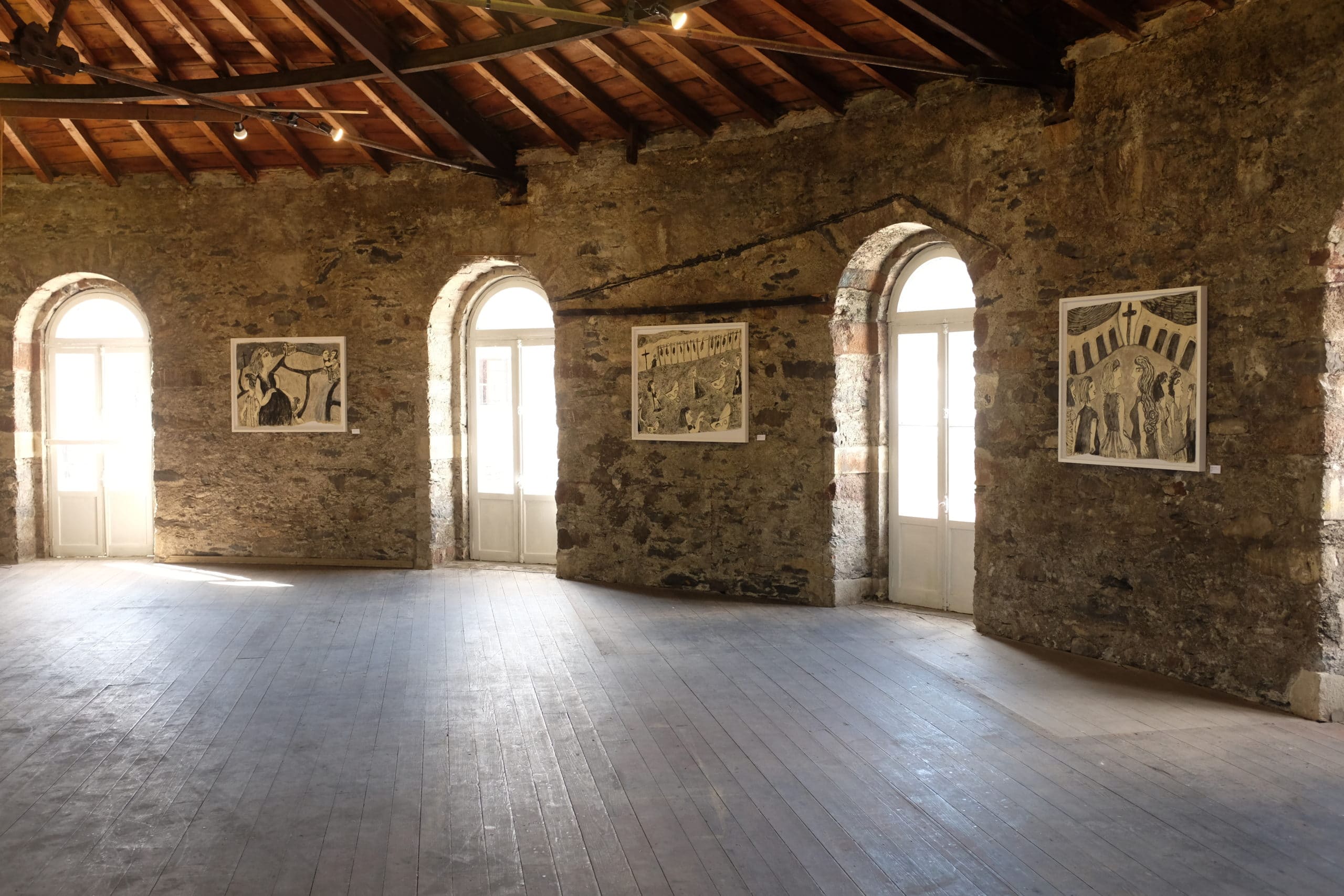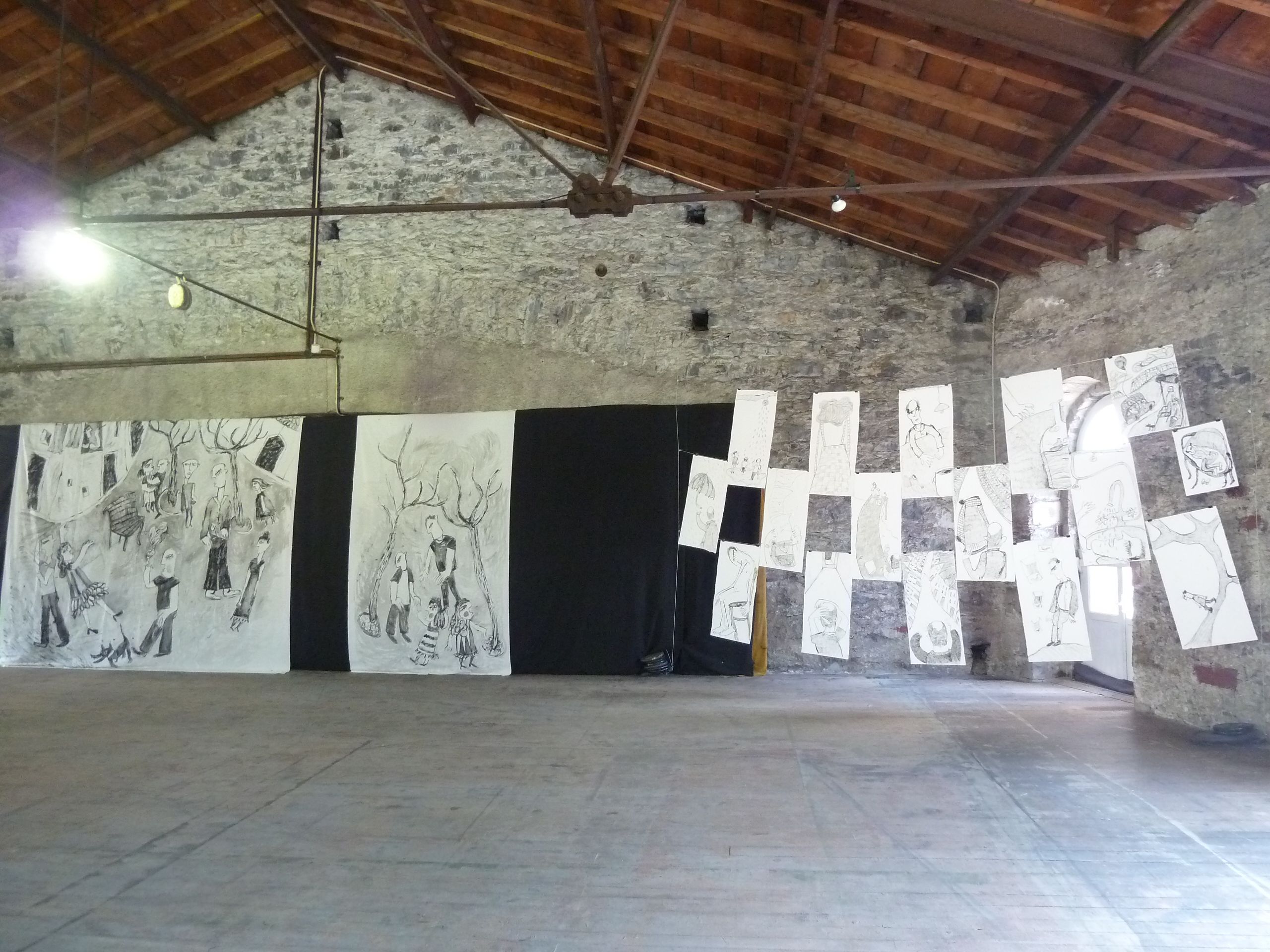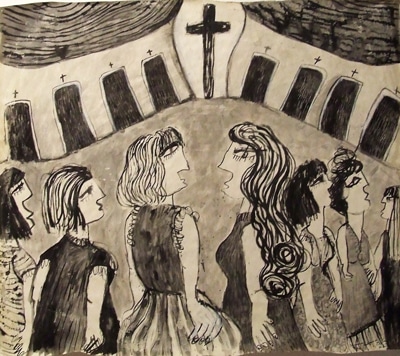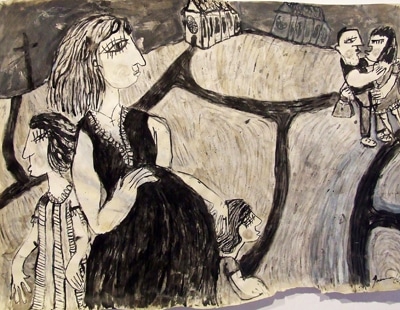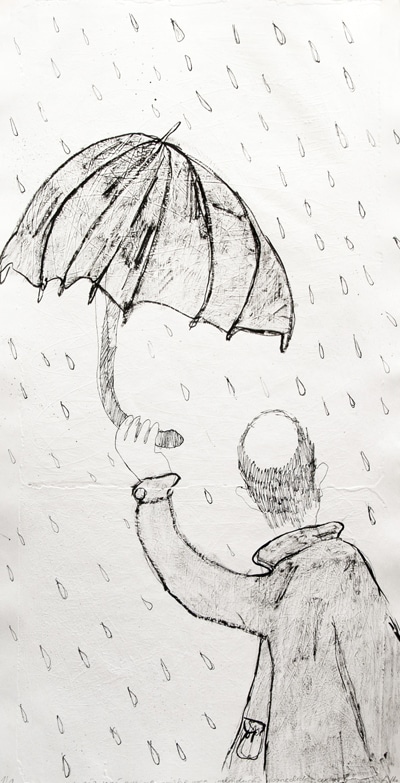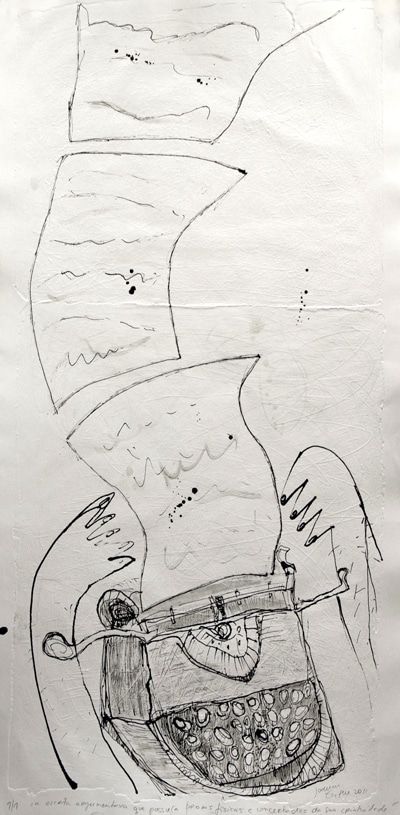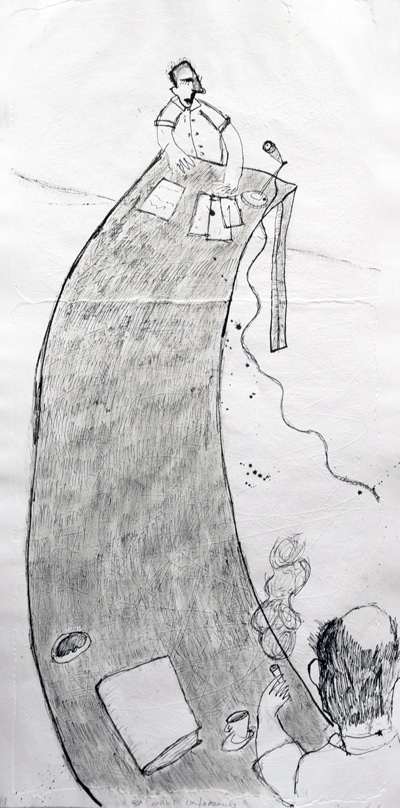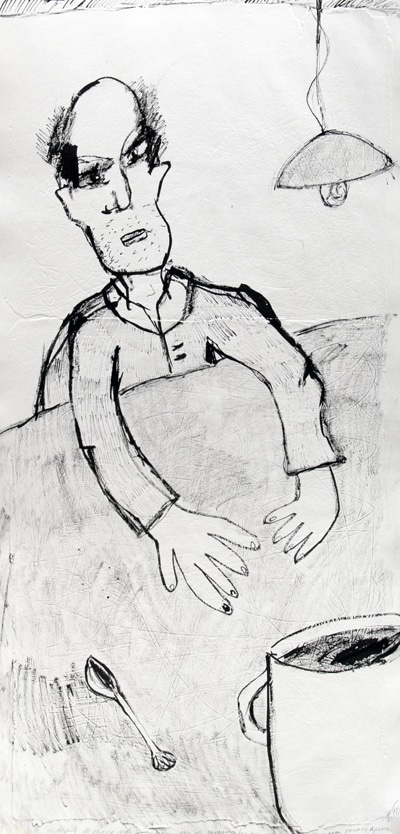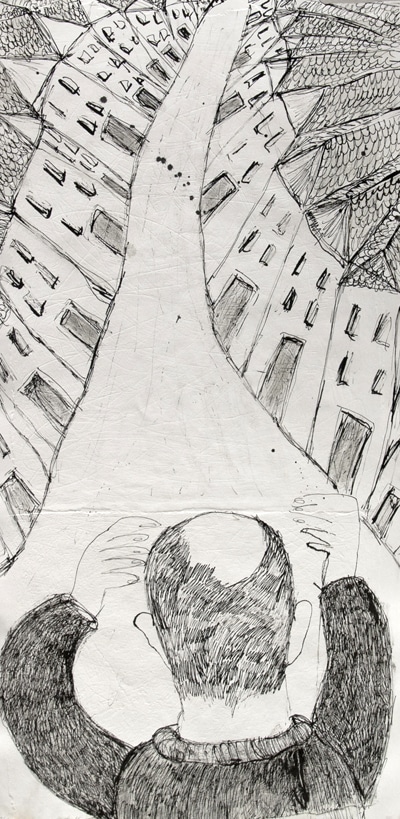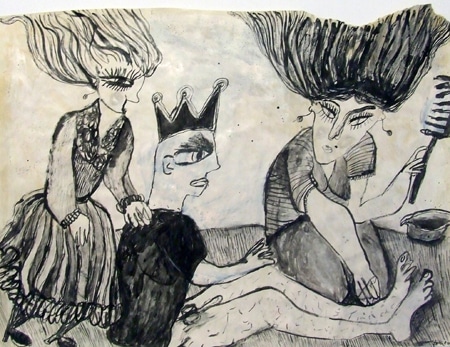
Joanna Latka presents these “As tentações do Senhor Valéry” which originate from the literary universe of Gonçalo M. Tavares, author of the series “O Bairro” in which the book “O Senhor Valéry” is included, and from the artist’s reflection on Woman and the Church. These are drawings and prints, marked by the strong expressionist character that defines her work. Speaking about her own practice, she says, “I observe, therefore I am,” and it was from this continuous, careful, sometimes critical, sometimes ironic observation that these two series, central to this exhibition, were born.
Mr. Valéry wanders through some neighborhood, recalling the artist’s first impressions upon arriving in our country, particularly the laundry lines with white clothes, immaculately arranged by the windows. He roams the streets, a man “small, but he took many leaps. He explained: I am like tall people, only for less time.” His name, Mr. Valéry, always accompanied by a certain logic, his own, leads him to “absurd conclusions.” One day, he encounters a woman, and his constant attempt to explain the world is threatened by the temptations that assail him. It is at this point that Joanna Latka’s narrative begins, giving new life to Gonçalo M. Tavares’s character, which in turn was already a fiction inspired by Paul Valéry, the 19th-century French philosopher.
These “As tentações do Senhor Valéry” are represented in an installation of drawings on blind prints, and in a series of India ink drawings on backdrop paper, where monochromatism is strongly present to emphasize a certain drama and density, bringing into the exhibition discourse themes such as the Judeo-Christian tradition, sin, guilt, good and evil, and the still unequal behavior of the Church and Religion toward Woman and Man. However, one should not expect any moralism or radicalism from Joanna Latka’s interpretation and reflection; on the contrary, its meaning is profoundly humanist.